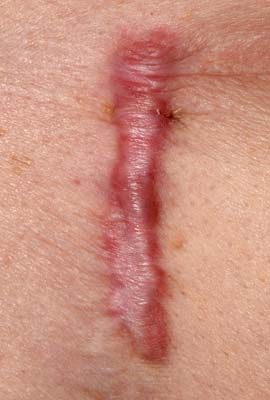
Keloid scars tend to persist or recur and can be difficult to treat effectively. There are a number of approaches to treating keloids.
Steroid injection
Injecting the keloid scar with steroid will usually make it reduce in size. If a keloid responds to steroid injections the injections will usually need to be repeated several times to make a keloid scar reduce sufficiently. Most keloids are not sufficiently treated with steroid injections alone and require additional treatment.
Surgical removal of keloids
Excising (cutting out) a keloid scar alone is usually not sufficient to control a keloid. In fact by cutting around the keloid the result is usually a larger wound than the original so the resulting keloid is larger and the situation may be worse.
Surgery is usually best used to reduce the size of the keloid by cutting out the bulk of the keloid but staying with in the edge of the keloid. This is called an intra-lesional excision. Once the wound is healed an additional treatment is needed to stop recurrence of the keloid. This is usually a course of steroid injections into the keloid. There are alternatives to steroid injections such as radiotherapy to the scar and pressure therapy. Some people use the chemotherapy drug 5 fluorouracil (5-FU) and inject this into the scar instead of steroid.
Combination therapy
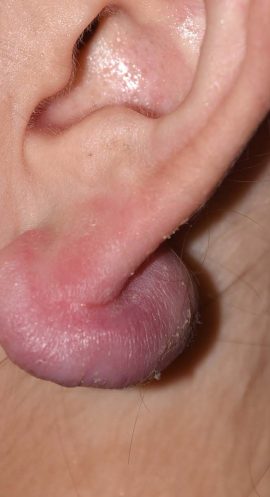
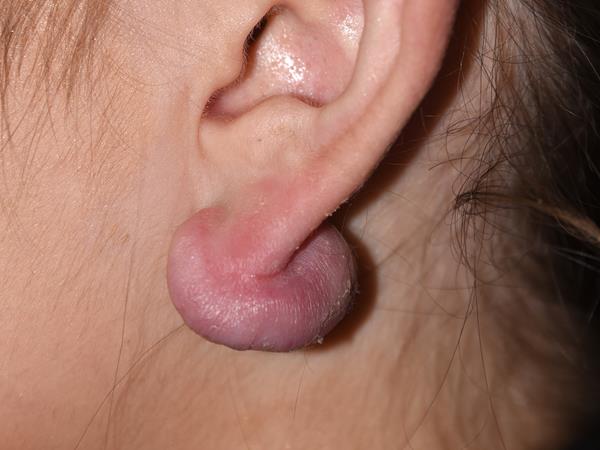
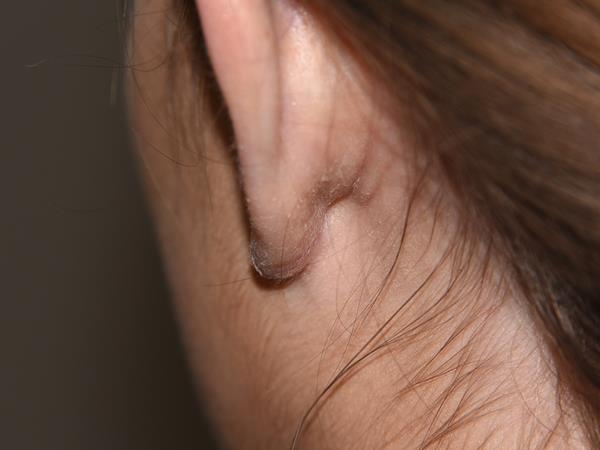
A combination of therapies is usually the best approach to keloids. This is particularly true of the relatively common ear keloids following piercings. An initial 1-2 steroid injections are carried and the response assessed. These are continued if successful. However, often there is a significant residual lump of keloid scar. This is then reduces with in intra lesional surgical excision. Then further steroid injections are used to prevent recurrence. Radiotherapy and pressure therapy are potential alternatives.
Radiotherapy for keloid scars
Radiotherapy especially in combination with surgery can be effective in controlling keloid scars. The problem with radiotherapy is that it uses ionising radiation. Ionising radiation can cause cancer and therefor there is a reluctance to use it to treat benign conditions such as keloids especially in younger people.
Pressure therapy for keloids of the ear.
Pressure can be used to control keloids scars. This usually only practical for keloids of the ear. A pressure clip is placed across the keloid and provides a constant pressure. The pressure needs to be carefully adjusted. Too tight and it can cause ulceration and too loose it does not work. Some people find these pressure clips can adequately treat an ear keloid. The clip will usually need to be worn for a number of weeks or months. It be disguised as a earring or covered with hair.
Pressure clips can also be used in combination with surgery or steroid injections.